 Book a Home Trial


A yellow diamond is a real diamond whose colour comes from traces of nitrogen in its crystal. When the yellow is strong enough, it is no longer treated as a "tinted" white diamond but graded as a fancy colour diamond, on a scale from Fancy Light to Fancy Vivid. Lab grown yellow diamonds are chemically the same as mined ones, and a good grading report will tell you the colour grade, that the stone is laboratory-grown, and whether its colour was produced during growth or by a treatment afterwards.
In this guide:
- How yellow and other fancy colours form, in nature and in the lab
- Fancy colour grades explained: Fancy Light, Fancy, Intense and Vivid
- Pink, blue, champagne and green lab grown diamonds
- How fancy colour lab grown diamonds are certified
- Choosing a shape, setting and metal
- A buying checklist, common mistakes and FAQs
Yellow diamond vs a white diamond with a yellow tint
This is the first thing to get straight, because the same word "yellow" is used for two very different stones.
White diamonds are graded on the D-to-Z scale, where D is completely colourless and the stones become more noticeably yellow or brown further down the alphabet. A K or M colour diamond is a white diamond with a warm tint, and that tint lowers its grade. Our lab grown diamond colour chart explains that scale grade by grade.
A fancy yellow diamond is different. Its colour is strong and even enough that it goes past the end of the D-to-Z scale and is graded for how rich and pure the yellow is. In a fancy colour stone, more colour is the point, not a flaw.
| Feature | Tinted white diamond (K to Z) | Fancy yellow diamond |
|---|---|---|
| Grading scale | D-to-Z letter grade | Fancy colour terms (Fancy Light to Fancy Vivid) |
| Is more colour better? | No, it lowers the grade | Yes, stronger and purer colour is graded higher |
| How it looks | Pale, slightly warm or straw-coloured | Clearly lemon, sunflower or golden yellow |
| Best cut style | Round brilliant, to hide the tint | Radiant or cushion, to concentrate colour |
How yellow and fancy colours form
In natural diamonds
Pure diamond is carbon and, in a perfect crystal, colourless. Colour appears when something interrupts that lattice:
- Yellow: nitrogen atoms replacing some carbon atoms absorb blue light, so the diamond looks yellow. The most saturated "canary" yellows usually contain nitrogen as single, isolated atoms.
- Blue: traces of boron.
- Pink and red: distortion of the crystal lattice under heat and pressure deep in the earth, rather than a trace element.
- Green: long exposure to natural radiation.
- Brown and champagne: lattice distortion, the most common cause of colour in mined diamonds.
In lab grown diamonds
Lab grown diamonds are made by one of two methods, HPHT (high pressure, high temperature) or CVD (chemical vapour deposition). Our guide to how lab grown diamonds are made covers both in detail. Colour is produced in two broad ways:
- Colour during growth. Adding a controlled amount of nitrogen during HPHT growth produces yellow; adding boron produces blue. Gemmological research, including a GIA lab note on Fancy Vivid yellow HPHT diamonds, describes how carefully nitrogen, temperature and pressure must be controlled to reach a strong, even yellow.
- Colour after growth. Many pink, red, green and some yellow lab grown diamonds start as CVD or HPHT stones and are then given a post-growth treatment, such as high-temperature annealing or irradiation followed by annealing, which changes how the crystal absorbs light. This is permanent, not a coating.
Neither route makes the diamond less real: it is still crystalline carbon with the hardness and sparkle of any diamond. What matters is that the method is disclosed, which is the job of the grading report.
Fancy colour grades explained
Fancy colour diamonds are graded on how strong (saturation) and how light or dark (tone) the colour is. The main grading terms, from weakest to strongest, are:
| Grade | What you see | Who it suits |
|---|---|---|
| Faint, Very Light, Light | A soft wash of colour; these sit at the edge of the fancy range | Buyers who want only a hint of warmth |
| Fancy Light | Pale but clearly yellow (or pink, or blue) | Subtle everyday pieces; colour is gentle in white settings |
| Fancy | A definite, even colour | A balanced choice for rings and pendants |
| Fancy Intense | Rich, saturated colour that is obvious from across a room | Statement rings, cocktail rings, bridal centre stones |
| Fancy Vivid | The strongest, purest colour; the classic "canary" yellow | Buyers who want maximum colour |
| Fancy Deep, Fancy Dark | Strong colour with a darker tone | Buyers who like deep, moody shades such as cognac or deep blue |
Two practical points. First, "canary" is a trade name, not a grade: always check the actual grade on the report. Second, a fancy grade can include a secondary colour, for example "Fancy Intense Orangy Yellow" or "Fancy Greenish Yellow". The last word is the main colour; the modifier changes the shade, and many buyers prefer a pure yellow without a modifier.
Other fancy colours: pink, blue, champagne and green
Yellow is the most widely available fancy colour in lab grown diamonds, but it is not the only one.
| Colour | Cause in nature | How it is usually achieved in lab grown diamonds | Metal it suits |
|---|---|---|---|
| Yellow | Nitrogen | Nitrogen during HPHT growth; some stones treated after growth | Yellow gold |
| Pink | Lattice distortion | Usually CVD growth followed by post-growth treatment | Rose gold or white gold |
| Blue | Boron | Boron during growth, or post-growth treatment | White gold |
| Champagne / brown | Lattice distortion | Growth conditions or treatment | Rose or yellow gold |
| Green | Natural radiation | Post-growth treatment | Yellow or white gold |
Pink and blue are the colours buyers ask about most after yellow. Pink suits rose gold and soft bridal looks; blue reads crisp and modern in white gold. Champagne shades are warm and understated, and they hide everyday dust better than very pale stones.
How fancy colour lab grown diamonds are certified
A fancy colour lab grown diamond should come with a report from an independent laboratory. At Ivana Jewels every diamond is certified by IGI or SGL. On a coloured lab grown diamond, read these lines carefully:
- Description: it should say "Laboratory-Grown Diamond" (or similar). This is the line that separates a lab grown stone from a natural one.
- Growth method: reports usually state whether it was created by CVD or HPHT.
- Colour grade: a fancy term such as "Fancy Vivid Yellow" or "Fancy Intense Pink" instead of a D-to-Z letter.
- Treatment or colour origin comment: look for wording such as "As Grown" or "Indications of post-growth treatment". Natural fancy diamonds have the same disclosure issue: a natural stone can have "natural colour" or "treated colour", and the two are valued very differently.
- Carat, clarity, cut details and measurements: check the carat and measurements against the stone in front of you.
- Report number and inscription: verify the report on the laboratory's own website, and where the girdle is laser-inscribed, ask to see the number under a loupe. The International Gemological Institute (IGI) offers online report verification.
A treated colour is not a reason to avoid a lab grown diamond; most strong pinks, greens and some yellows are made that way. It is simply a fact you should know, and a reputable seller will show it to you rather than leave it out.
Choosing a shape, setting and metal
Shape
Shape changes how much colour you see. Round brilliants are cut to return white light and sparkle, which tends to dilute colour. Radiant and cushion cuts, with their many mixed facets, bounce light around inside the stone and make the colour look deeper, which is why so many yellow diamonds are cut this way. Pear, oval and marquise shapes can show more colour at their tips. If you are unsure which outline you like, our guide to fancy shape diamonds compares them.
Setting
- Yellow gold prongs under the centre stone: a common trick for yellow diamonds. The gold reflects into the stone and makes the yellow look richer.
- Halo of white diamonds: frames the colour and makes the centre look larger; the contrast makes yellow and pink stones pop.
- Three-stone: a coloured centre with white side stones, or white centre with coloured sides, for a balanced look.
- Bezel: a rim of metal around the stone; good for active lifestyles, and in yellow gold it intensifies yellow.
Metal
Ivana Jewels sets diamonds in BIS hallmarked 9kt, 14kt and 18kt gold, in yellow, rose and white. As a rough guide: yellow diamonds in yellow gold (or a white band with a yellow gold head), pink diamonds in rose or white gold, blue diamonds in white gold, and champagne in rose or yellow gold. Browse yellow gold engagement rings to see how warm metal changes the look of a ring.
Fancy colour lab grown diamonds at Ivana Jewels
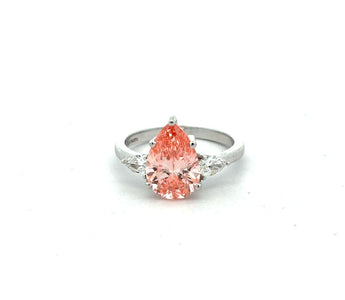
Ivana Jewels makes jewellery with coloured lab grown diamonds, including pink, yellow, vivid blue and champagne, through its custom jewellery service. Custom pieces start with a design discussion and a CAD render for your approval before production. At the time of writing, ready-made coloured diamond pieces in the online catalogue are limited; one example is this pear-cut pink lab grown diamond ring. To see how colour affects the estimate for a custom piece, choose a diamond colour in our jewellery price calculator; coloured lab grown diamonds cost a little more per carat than white ones.
Buying checklist for a yellow or fancy colour diamond
- Decide how much colour you want. Look at Fancy Light, Fancy Intense and Fancy Vivid side by side, in daylight and under store lighting.
- Check the grade on the report, not the sales name. "Canary", "lemon" or "sunshine" are descriptions, not grades.
- Read the secondary colour. "Greenish" or "brownish" modifiers change the look; decide whether you like them.
- Confirm lab grown and growth method on the IGI or SGL report, and check for "As Grown" or a post-growth treatment comment.
- Look at colour evenness. Turn the stone; strong colour that is patchy or concentrated in one zone looks weaker once set.
- Choose shape for colour. Radiant or cushion for the deepest yellow; round if you prefer sparkle over colour.
- Match the metal. Try the stone against yellow, rose and white gold before you decide.
- Ask about buyback and exchange. Ivana Jewels offers a Lifetime Buyback and Exchange; ask how it applies to a custom coloured piece before you order.
Common mistakes to avoid
- Confusing a low-colour white diamond with a fancy yellow. A K to M stone is a tinted white diamond, not a fancy colour.
- Judging colour on a phone screen. Screens and studio lighting exaggerate saturation. Ask for a video in daylight or see the stone in person.
- Ignoring the treatment line. It does not make a stone worse, but you should know what you are buying.
- Choosing a round for maximum colour. A round brilliant will look lighter than a radiant of the same grade.
- Setting a pale yellow in white prongs. White metal can make a Fancy Light stone look washed out.
Comparing costs? Our article on yellow vs white diamond prices explains what pushes the price of a yellow stone up or down.
How Ivana can help
If you are considering a yellow, pink or other coloured lab grown diamond, it helps to see stones in person and talk through shape, metal and setting. You can visit any of our 16 showrooms through the store locator, book an appointment, or start a custom design online. Every Ivana diamond comes with an IGI or SGL report, every piece is set in BIS hallmarked gold, and product pages show a full price breakup so you can see what you are paying for. For a general introduction to the material, read about lab grown diamonds.
FAQs
Are yellow diamonds real diamonds?
Yes. A yellow diamond, natural or lab grown, is crystalline carbon with the same hardness and optical properties as a white diamond. The yellow comes from nitrogen in the crystal. A lab grown yellow diamond is a real diamond that was grown in a controlled environment rather than mined.
What is a canary diamond?
"Canary" is a trade name for a strong, bright yellow diamond, usually in the Fancy Intense or Fancy Vivid range. It is not an official grade, so always check the fancy colour grade on the grading report.
Are lab grown yellow diamonds treated?
Some are and some are not. Many yellow lab grown diamonds get their colour from nitrogen added during HPHT growth; others are treated after growth to produce or improve the colour. The grading report should say whether the stone is "As Grown" or shows indications of post-growth treatment.
Which colour of lab grown diamond is the rarest?
In natural diamonds, red, pink, blue and green are far rarer than yellow. In lab grown diamonds, rarity matters less because colour can be produced on purpose, but strong, even pinks and blues in larger sizes still take more work to grow and treat, so they are less widely available than yellow.
Does a yellow diamond look good in white gold?
It can, especially in a strong Fancy Intense or Fancy Vivid grade, where the contrast looks crisp and modern. Paler yellows can look washed out in white metal, so many jewellers set the centre in yellow gold prongs on a white gold band.
Can Ivana Jewels make a ring with a coloured lab grown diamond?
Yes. Ivana Jewels makes jewellery with coloured lab grown diamonds, including pink, yellow, vivid blue and champagne, through its custom service, with an IGI or SGL certified diamond and BIS hallmarked gold. Ready-made coloured pieces online are limited, so the custom route or a store visit is the best way to see options.
How do I check that a coloured diamond is lab grown?
Read the grading report: it should describe the stone as laboratory-grown and state the growth method. Then verify the report number on the laboratory's website and, if the stone is inscribed, match the inscription under a loupe.


