 Book a Home Trial


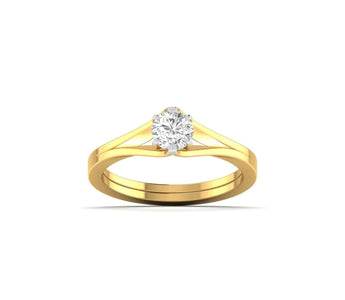
Lab grown diamonds are graded on the same D-to-Z colour scale as natural diamonds, where D is completely colourless and Z shows a clear yellow or brown tint. For most buyers in India, an E, F or G colour lab grown diamond looks colourless once it is set, and G or H is often enough in yellow or rose gold. The right grade depends less on the letter and more on the shape, the size of the stone and the metal it sits in.
In this guide:
- The lab grown diamond colour chart, grade by grade
- Why some lab diamonds look slightly brown or yellow
- How shape, carat and metal change the grade you need
- How to read the colour line on an IGI or SGL report
- A step-by-step way to check colour in a store
- Common mistakes and FAQs
What does diamond colour actually measure?
For white diamonds, colour grading measures the absence of colour. A gemmologist compares the stone, face down, against a set of master stones under controlled light and assigns a letter. The less body colour the diamond has, the higher (earlier in the alphabet) the grade.
Colour is one of the 4Cs, alongside cut, clarity and carat. If you are new to how they work together, start with our guide to the 4Cs of diamonds explained, then come back here for the detail on colour.
Because lab grown diamonds are chemically and optically the same material as mined diamonds, grading laboratories such as the International Gemological Institute (IGI) use the same D-to-Z scale for both. A G colour lab grown diamond and a G colour natural diamond should look the same to your eye.
The lab grown diamond colour chart
The scale is split into groups. The jump between neighbouring letters is very small; the jump between groups is easier to notice.
| Grade | Group | What you see once set | Best suited to |
|---|---|---|---|
| D, E, F | Colourless | Icy white, even side-on. D, E and F are hard to tell apart without master stones. | Solitaires in white gold or platinum-look settings, large fancy shapes, buyers who want the top of the scale |
| G, H | Near colourless (upper) | Looks white face-up. A faint warmth may show from the side next to a D stone. | Most engagement rings, studs, pendants; excellent value in any metal |
| I, J | Near colourless (lower) | Slight warmth visible in larger stones, especially in white metal. | Smaller stones, yellow gold settings, vintage-style looks |
| K, L, M | Faint | A visible warm or brownish tone. | Buyers who prefer a warm, antique look |
| N to Z | Very light to light | Clearly tinted yellow or brown. | Rarely used in modern lab grown fine jewellery |
Most lab grown diamonds sold in fine jewellery today sit between D and J, because growers can control colour far more tightly than nature does. That is why colourless and near-colourless grades are far easier to find in lab grown stones than in mined ones.
Fancy colours sit outside the chart
Pink, blue, yellow and green lab grown diamonds are not graded D to Z. They are described with fancy-colour terms such as "Fancy Intense Pink" or "Fancy Vivid Blue", which describe hue and strength rather than the absence of colour. If you are buying a coloured stone, the D-to-Z advice in this guide does not apply. Our yellow diamond guide explains how fancy colour grades, treatments and settings work for yellow, pink and blue lab grown diamonds.
Why some lab grown diamonds look brown or yellow
This is the part most colour guides skip, and it matters when you read a report.
- CVD diamonds (chemical vapour deposition) can come out of the growth chamber with a brownish tint, especially when they are grown quickly. Lower-colour CVD stones therefore tend to look slightly brown rather than yellow.
- HPHT diamonds (high pressure, high temperature) that pick up traces of nitrogen during growth tend to look yellowish. Boron, by contrast, gives a blue tint.
To improve colour, many CVD diamonds are given a post-growth treatment: a high-temperature anneal that removes the brown tint. Gemmological research bodies such as GIA's Gems and Gemology research summary describe this as a widespread industry practice. Grading reports note it in the comments, usually with wording such as "Indications of post-growth treatment", while some reports state the stone is "As Grown".
Is a treated stone worse? Not in appearance: it is graded on how it looks after treatment, and the annealing is a permanent heat process, not a coating. What matters is disclosure. You should know which you are buying, and the report should say so. For more on how the two growth methods differ, see HPHT vs CVD diamonds explained.
Which colour grade should you buy? It depends on three things
1. The metal
Metal reflects into the diamond. Yellow and rose gold add warmth, which hides a faint tint; white gold shows the stone's true colour more honestly.
| Metal | Effect on colour | Sensible colour range |
|---|---|---|
| White gold | Neutral backdrop; any warmth in the diamond shows | D to G |
| Yellow gold (14kt or 18kt) | Warm reflections mask slight tint | F to I |
| Rose gold | Pink-warm reflections; very forgiving | F to I |
| Two-tone (white head, yellow band) | Diamond sits in white prongs, so it reads like white gold | D to G |
2. The shape
Round brilliants have the most facets and return the most white light, so they hide colour best. Elongated and step-cut shapes concentrate colour at the tips or show it through their large, open facets.
- Round: the most forgiving; G or H looks white in most settings.
- Princess, cushion, radiant: fairly forgiving; consider one grade higher than round if set in white gold.
- Oval, pear, marquise: colour can gather at the pointed ends; F or G is a safer choice above one carat.
- Emerald and Asscher: step cuts act like a window, so colour and clarity show more; aim for E to G.
3. The size
Colour becomes easier to see as stones get bigger, because light travels a longer path through a larger diamond. A 0.30 ct stud in H colour will look perfectly white; a 2 ct oval in H colour in white gold may show a soft warmth.
As a rule of thumb: for stones under one carat, G to H is usually ample. For one to two carats, F to G is a comfortable choice. Above two carats, especially in fancy shapes, E to F avoids any visible tint. Our diamond carat size chart in mm shows how big each weight actually looks.
What about small diamonds in pavé and halos?
Jewellery with many small stones, such as eternity bands, halo rings or tennis bracelets, normally states colour as a range (for example E–F or G–H), because each tiny stone is not graded individually. Make sure the small stones match the centre stone or sit within one grade of it, otherwise the centre can look warmer or whiter than its surround.
How to read the colour line on an IGI or SGL report
Every certified lab grown solitaire comes with a report. For colour, look at four places:
- Report type: it should clearly say "Laboratory-Grown Diamond" or similar. If it does not, ask why.
- Colour grade: a single letter (for example "F") for a white diamond, or a fancy-colour description for a coloured one.
- Fluorescence: listed as None, Faint, Medium, Strong or Very Strong. For a simple, predictable look, None or Faint is the easiest choice.
- Comments: this is where the growth method (CVD or HPHT) and any post-growth treatment are disclosed, along with the laser inscription number.
Then confirm the report is genuine by entering the report number on the laboratory's website and matching it with the laser inscription on the girdle. Our step-by-step guides on how to read a lab grown diamond certificate and on verifying IGI and SGL reports online walk through every line.
If your report shows Medium, Strong or Very Strong fluorescence, our guide to diamond fluorescence in lab grown diamonds explains when it affects how a stone looks and when it does not.
How to check diamond colour in a store: a checklist
Grades are measured in a laboratory, but you will wear the ring in daylight, at weddings and under office lights. Use this simple routine when you compare stones:
- Ask for two stones side by side of similar size and shape, one or two grades apart (for example E and G).
- Look face-up first. This is how people will see it on your hand. If you cannot see a difference face-up, the cheaper grade is doing the job.
- Then look side-on against a white card. This exaggerates body colour and shows you the "worst case".
- Check under more than one light: store spotlights make every diamond look whiter, so step near a window or switch to softer light.
- Try the stone in your chosen metal. A loose stone on a white tray looks different from the same stone in yellow gold.
- Read the report for colour, fluorescence and the treatment comment before you decide.
- Ask about exchange and buyback so you know your options if you want to upgrade the stone later.
Common mistakes to avoid
- Paying for D when nobody will see the difference. In a yellow gold solitaire under one carat, a D and a G look almost identical once set. Put the saving into cut quality or size instead.
- Choosing colour without thinking about cut. A well-cut G will often look brighter and whiter than a poorly cut E, because strong light return masks body colour.
- Ignoring the shape. An H colour that looks perfect as a round can look warm as a large pear or emerald cut.
- Comparing grades from different laboratories as if they were identical. Grading standards can vary slightly between laboratories. Compare stones graded by the same lab where you can.
- Skipping the comments section. That is where treatment and growth method are disclosed.
- Judging colour only under showroom spotlights. Always see the stone in more natural light before buying.
Colour versus clarity: where to spend first
If you have to choose, most people notice colour before they notice clarity, because colour affects the whole stone while most inclusions are invisible without magnification. A sensible order is: excellent cut first, then a colour that looks white in your chosen metal, then an eye-clean clarity. Our diamond clarity chart explained shows which clarity grades are eye-clean in practice.
How Ivana can help
Ivana Jewels creates lab grown diamond jewellery in BIS hallmarked 9kt, 14kt and 18kt gold, with diamonds certified by IGI or SGL. Here is how we can help you choose a colour grade with confidence:
- See colour in person. Visit any of our 16 showrooms to compare grades side by side in yellow, rose and white gold. Find your nearest one on our store locator.
- Book an appointment. Reserve time with a consultant in store or virtually through our appointment page, and ask to see stones under different lighting.
- Browse by style. Explore solitaire engagement rings, everyday diamond stud earrings and the wider range of lab grown diamond rings. Each product page shows the live price breakup, so you can see how diamond and gold weight make up the cost.
- Customise. If you want a particular colour grade, shape or metal combination, our team can help you design it.
- Peace of mind. Every purchase is backed by our Lifetime Buyback and Exchange, and online orders come with 7-day free returns.
FAQs
What is the best colour grade for a lab grown diamond?
There is no single best grade, but E, F and G are the most popular because they look colourless once set. For yellow or rose gold, G or H is usually enough. Choose a higher grade for large stones, fancy shapes and white gold.
Is a D colour lab grown diamond worth it?
A D colour diamond is the top of the scale and is completely colourless. Whether it is worth it depends on the setting: in white gold and larger stones, some people appreciate the icy look, but in yellow gold or smaller stones, most eyes cannot tell D from F or G once set.
Is H colour good for a lab grown diamond?
Yes, H is near colourless and looks white face-up in most jewellery, especially rounds under one and a half carats and any stone set in yellow or rose gold. In a large oval, pear or emerald cut set in white gold, you may prefer F or G.
Do lab grown diamonds turn yellow over time?
No. A diamond's colour comes from its atomic structure and any trace elements locked into it during growth, which do not change with normal wear. Post-growth colour treatment is a permanent heat process, not a coating. If a diamond ever looks dull, it is usually dirt or oil on the surface, which a proper clean removes.
Do lab grown and natural diamonds use the same colour scale?
Yes. Grading laboratories such as IGI apply the same D-to-Z scale to lab grown and natural white diamonds, so an F colour lab grown diamond should look the same as an F colour natural diamond.
Where can I see the colour grade of my diamond?
The colour grade is printed on the diamond's IGI or SGL report, next to the clarity and carat weight. You can verify the report number on the laboratory's website and match it with the laser inscription on the diamond's girdle.
Does fluorescence affect a lab grown diamond's colour?
Fluorescence is a glow some diamonds show under ultraviolet light. It is listed separately on the report. In most cases it does not change how the diamond looks in daylight; if you want the simplest choice, pick a stone with None or Faint fluorescence.


