 Book a Home Trial


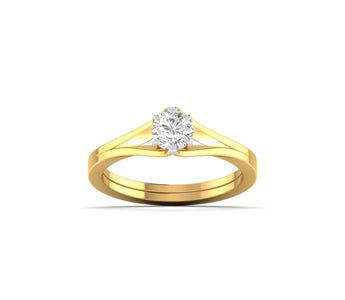
A lab grown diamond is a real diamond: pure carbon crystallised in the same cubic structure as a mined diamond, but grown in a controlled facility over a few weeks instead of forming underground over millions of years. It has the same hardness, sparkle and chemistry as a natural diamond, and it can only be told apart with specialist laboratory equipment. What separates it from a natural diamond is its origin, which is why every lab grown diamond should be sold with clear disclosure and an independent grading report.
In this guide:
- What "lab grown diamond" actually means
- How a lab grown diamond is made (HPHT and CVD in brief)
- Lab grown vs natural vs simulants: comparison table
- The names you will see: lab grown, lab created, synthetic, cultured
- How a lab grown diamond is identified and certified
- A step-by-step checklist before you buy
- Common mistakes to avoid
- How Ivana can help, and FAQs
What "lab grown diamond" actually means
The word "diamond" describes a material, not a place of origin. A diamond is carbon atoms locked into a cubic crystal lattice. That arrangement is what gives diamond its hardness (10 on the Mohs scale), its high refractive index and its fire. A lab grown diamond has exactly that structure, so it is not an imitation; it is the same material made by a different route.
Regulators reflect this. The US Federal Trade Commission's Jewelry Guides define a diamond as a mineral consisting essentially of pure carbon crystallised in the isometric (cubic) system, and require that a diamond made in a laboratory is clearly described with a qualifier such as "laboratory-grown" or "laboratory-created" (see 16 CFR Part 23). In India, the Bureau of Indian Standards' diamond terminology standard, IS 19469:2025, takes a similar approach: "laboratory-grown diamond" and "laboratory-created diamond" are the disclosure terms, and the word "diamond" used on its own is understood to mean a natural stone.
So the honest, simple meaning is: a lab grown diamond is a real diamond whose origin is a laboratory, and it must always be sold as one.
How a lab grown diamond is made
Every lab grown diamond starts with a "seed": a thin slice of diamond that gives new carbon atoms a template to build on. There are two growing methods. We explain both in depth in our guide to how lab grown diamonds are made with HPHT and CVD, so here is the short version.
HPHT (high pressure, high temperature)
A press recreates the crushing pressure and heat found deep inside the Earth. Carbon dissolves in a molten metal solvent and crystallises onto the seed. HPHT crystals tend to grow in a cuboctahedral shape.
CVD (chemical vapour deposition)
A carbon-rich gas, usually methane mixed with hydrogen, is energised into a plasma inside a vacuum chamber. Carbon atoms settle onto flat diamond seed plates and build up layer by layer into a block-shaped crystal. Some CVD diamonds then receive a post-growth treatment to improve colour, which a good grading report will disclose.
What happens after growth
This is the part most explanations skip. A rough lab grown crystal looks nothing like a finished gem. It is planned, cut and polished by the same craftsmen and with the same tools used for mined diamonds, then sent to an independent laboratory for grading. The final sparkle depends on that cutting, not on whether the crystal was grown or mined. Neither method is "better" by default; a well-cut HPHT stone and a well-cut CVD stone of the same grades look the same to the eye.
Lab grown vs natural vs simulants
The biggest source of confusion is mixing up lab grown diamonds with stones that only look like diamonds. This table shows where the real differences lie.
| Feature | Lab grown diamond | Natural diamond | Moissanite | Cubic zirconia (CZ) |
|---|---|---|---|---|
| Material | Carbon (diamond) | Carbon (diamond) | Silicon carbide | Zirconium dioxide |
| Is it a diamond? | Yes | Yes | No | No |
| Hardness (Mohs) | 10 | 10 | About 9.25 | About 8 to 8.5 |
| Optical look | Diamond brilliance | Diamond brilliance | Stronger rainbow fire | Glassier, can cloud over time |
| Origin | Grown in weeks | Formed over millions of years | Lab made | Lab made |
| Graded with the 4Cs | Yes (e.g. IGI, SGL) | Yes | Not as a diamond | No |
| Can a jeweller's tester tell it from natural? | No, needs lab equipment | - | Often, with the right tester | Yes |
If you are weighing these options, our comparison of moissanite, CZ and lab grown diamonds goes into durability and long-term wear in more detail.
The names you will see: lab grown, lab created, synthetic, cultured
Search results and shop labels use several names for the same thing. Here is what each one means:
- Lab grown / laboratory-grown: the most widely used and clearest term.
- Lab created / laboratory-created: means exactly the same thing. We compare the two terms in lab created vs lab grown diamonds.
- Synthetic: a technical and trade term. It is accurate in the scientific sense (made by people), but shoppers often misread it as "fake", so consumer-facing descriptions generally avoid it.
- Cultured: borrowed from cultured pearls. Under the FTC Guides it should not be used on its own and must be accompanied by a clear qualifier such as "laboratory-grown".
- CVD or HPHT diamond: names that describe the growth method, not a different product.
Terms like "American diamond" or "AD" are different: in Indian jewellery shops they usually refer to cubic zirconia, which is not a diamond at all.
How a lab grown diamond is identified and certified
Because the material is identical, the standard thermal "diamond tester" used in many shops will read a lab grown diamond simply as "diamond". Gemmological laboratories use spectroscopy, fluorescence imaging and growth-pattern analysis to confirm origin. That is why independent grading matters more than anything a seller tells you.
What a lab grown grading report shows
- A clear statement that the stone is laboratory-grown
- Shape, measurements and carat weight
- Colour, clarity and cut grades (the 4Cs)
- Polish, symmetry and fluorescence
- The growth method (HPHT or CVD) and any post-growth treatment, where the lab reports it
- A report number, which is usually also laser-inscribed on the diamond's girdle
At Ivana, solitaires are certified by IGI or SGL. Our guide to IGI vs SGL certification explains how the two labs compare, and you can check any IGI report number directly on the International Gemological Institute website.
Checklist: what to confirm before you buy a lab grown diamond
- Disclosure in writing. The product page, tag and invoice should all say "lab grown" or "laboratory-grown". If the bill only says "diamond", ask for it to be corrected.
- Report number match. For a solitaire, match the report number on the certificate to the inscription on the girdle (ask the store to show it under a loupe) and to the lab's online database.
- The 4Cs that matter for you. For most jewellery, cut grade has the biggest effect on sparkle. Colour and clarity can be balanced against size.
- Metal and hallmark. The diamond is only half the piece. Check the gold karat and the BIS hallmark on the metal.
- Price breakup. A transparent seller shows diamond, gold, making and tax separately so you can compare like for like.
- Buyback and exchange terms. Ask what happens if you want to upgrade or sell later, and get it in writing.
- Returns. For online purchases, confirm the return window and what condition the piece must be in.
Is a lab grown diamond worth buying?
It depends on what you want the diamond to do. Here is a practical way to decide:
- Choose lab grown if you want a bigger or better-graded stone for your budget, you value traceable origin, and you are buying the piece to wear and enjoy, for example an engagement ring, everyday studs or a bridal set.
- Consider natural if rarity and geological age matter to you personally, or you expect to resell the stone on the open market.
Resale is the honest caveat. The open second-hand market for lab grown diamonds is still thin, so the value you can recover depends heavily on the seller's own buyback policy. Read how that works in practice in our guide to lab grown diamond buyback in India.
For a concrete example: two round solitaires with the same IGI grades, one lab grown and one natural, will look identical across a dinner table and under a jeweller's loupe. The difference sits on the report and the invoice, not in the sparkle.
Common mistakes to avoid
- Treating "lab grown" as a quality grade. It describes origin only. A lab grown diamond can be poorly cut or heavily included, just like a mined one, so always look at the grades.
- Relying on a handheld tester. It cannot separate lab grown from natural. Use the grading report and the girdle inscription.
- Confusing lab grown with American diamond or moissanite. They are different materials with different durability.
- Ignoring the metal. Gold karat and hallmarking affect durability and value as much as the stone does.
- Skipping the buyback question. Policies vary widely between jewellers.
How Ivana can help
Ivana Jewels specialises in lab grown diamond jewellery, set in BIS hallmarked 9kt, 14kt and 18kt gold. Solitaires come with IGI or SGL certification, and our jewellery is backed by Lifetime Buyback & Exchange. Online orders have 7-day free returns.
- See the difference in person: visit one of our 16 showrooms using the store locator and ask to compare stones of different grades side by side.
- Check the live price breakup: product pages show a live price breakup, so you can see what you are paying for before you visit or order.
- Browse by piece: start with our lab grown diamond rings, diamond engagement rings or diamond earrings.
- Customise: our team can help you choose a stone and setting and build a piece around it.
For an overview of why we chose lab grown, see our page on lab-grown diamonds at Ivana.
FAQs
Is a lab grown diamond a real diamond?
Yes. It has the same carbon crystal structure, hardness and optical properties as a mined diamond. It is not a simulant like cubic zirconia or moissanite. The only difference is that it was grown in a controlled facility rather than formed in the Earth.
What is the meaning of lab grown diamond in simple words?
It is a diamond made by people instead of mined from the ground. Scientists recreate the conditions in which diamonds form, and carbon grows into a diamond crystal around a small diamond seed. It is then cut, polished and graded like any other diamond.
Can a jeweller tell if a diamond is lab grown?
Not by eye or with a standard thermal tester. Identifying origin needs laboratory equipment such as spectroscopy and fluorescence imaging. In practice, you rely on the grading report and the matching laser inscription on the girdle.
Do lab grown diamonds last forever?
They are as durable as natural diamonds, scoring 10 on the Mohs hardness scale, so they will not cloud, fade or lose their sparkle. Like any diamond, they can chip if struck hard at a weak point, and they still need regular cleaning to look their best.
Is "lab created" the same as "lab grown"?
Yes. Both terms describe a diamond produced in a laboratory and they are used interchangeably. "Synthetic" also refers to the same material, though it is mainly used in technical and trade contexts.
Which certificate should a lab grown diamond have?
Look for a report from an independent gemmological laboratory that grades lab grown diamonds. Ivana's solitaires are certified by IGI or SGL, and the report number can be checked on the laboratory's website.
Do lab grown diamonds have resale value?
The open resale market is limited, so recovery value depends mostly on the jeweller's buyback or exchange policy. Ivana offers Lifetime Buyback & Exchange; ask for the current terms in store or on the product page before you buy.


