 Book a Home Trial


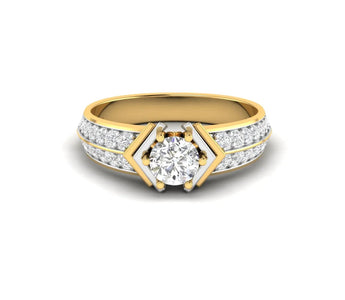
Yes, lab created diamonds and lab grown diamonds are the same thing. Both terms describe real diamonds made of crystallised carbon, grown in a laboratory instead of mined, with the same hardness, sparkle and chemical make-up as a natural diamond. The words differ only in marketing and regional habit. What does matter is not confusing them with simulants such as cubic zirconia, moissanite or "American diamond", which look similar but are not diamonds at all.
In this guide:
- Lab created, lab grown, man-made, cultured, synthetic: what each term means
- What the FTC's jewellery guidance says about these words
- Lab created diamonds vs simulants vs natural diamonds
- How lab created diamonds are made (CVD and HPHT)
- How to confirm what you are buying, step by step
- Common mistakes, how Ivana can help, and FAQs
One Diamond, Many Names
Different sellers, countries and laboratories use different words for the same product. Here is what each one actually signals.
| Term | What it means | Is it a real diamond? | Where you see it most |
|---|---|---|---|
| Lab grown / laboratory-grown | A diamond crystal grown in a controlled laboratory | Yes | India, UK and grading reports |
| Lab created / laboratory-created | Exactly the same product as lab grown | Yes | US retailers and search terms |
| Man-made / lab made | Informal names for lab grown diamonds | Yes | Everyday conversation |
| CVD or HPHT diamond | A lab grown diamond named after its growing method | Yes | Indian trade and price lists |
| Cultured diamond | A lab grown diamond, borrowing the language of cultured pearls | Yes, but the term needs a clear qualifier | Some brand marketing |
| Synthetic diamond | The older scientific term for a lab grown diamond | Yes, though the word is often misunderstood as "fake" | Scientific and industrial use |
| Simulant (CZ, moissanite, American diamond) | A different material made to look like diamond | No | Fashion and imitation jewellery |
The key line in that table is the last one. Lab created and lab grown diamonds are diamonds. Simulants are not. If you want to understand that difference in depth, our comparison of lab grown vs American diamonds covers it piece by piece.
What the FTC Guidance Says About the Words
Much of the "lab created" wording comes from the USA, where the Federal Trade Commission publishes jewellery marketing guidance in its Guides for the Jewelry, Precious Metals, and Pewter Industries. The 2018 revision of those guides is a useful neutral reference:
- A diamond is defined by what it is, not where it formed. The revised guides no longer define a diamond as "natural", which recognises lab grown stones as diamonds.
- Origin must still be disclosed clearly. Terms such as "laboratory-grown", "laboratory-created" or "[manufacturer name]-created" are accepted ways to tell buyers the stone was not mined.
- "Cultured" needs care. On its own it can suggest a natural process, so it should be clearly qualified.
- "Synthetic" should not be used to imply a stone is fake. The FTC cautioned sellers against using it to suggest that a lab grown diamond is not a real diamond.
In India, buyers and sellers mostly use "lab grown", while US-facing websites lean towards "lab created". Both describe the same product, and both should come with a certificate that states the diamond is laboratory-grown.
Lab Created vs Simulant vs Natural: How They Compare
| Property | Lab created / lab grown diamond | Natural diamond | Moissanite | Cubic zirconia (American diamond) |
|---|---|---|---|---|
| Material | Carbon | Carbon | Silicon carbide | Zirconium dioxide |
| Hardness (Mohs scale) | 10 | 10 | About 9.25 | About 8 to 8.5 |
| Look | Diamond brilliance and fire | Diamond brilliance and fire | Stronger rainbow flashes | Glassier; can cloud over time |
| Graded with the 4Cs | Yes | Yes | Not as a diamond | No |
| Passes a standard diamond tester | Yes (thermal testers) | Yes | Often, which is why lab testing matters | No |
| How to tell it is lab grown | Laboratory testing and the grading report | Laboratory testing and the grading report | Not applicable | Not applicable |
The practical takeaway: you cannot tell a lab created diamond from a natural one by eye or with a simple tester. Only laboratory equipment can identify the origin, which is why the grading report is so important. For more on how simulants differ, see our guide to moissanite, CZ and lab grown diamonds.
How Lab Created Diamonds Are Made
Lab created diamonds are grown by recreating the conditions that form diamond crystals, using one of two methods.
CVD (chemical vapour deposition)
A thin diamond "seed" plate sits in a vacuum chamber filled with carbon-rich gas. The gas is energised into a plasma, and carbon atoms settle onto the seed layer by layer, growing a rough diamond crystal over a period of weeks.
HPHT (high pressure, high temperature)
A diamond seed is placed with a carbon source and a metal catalyst inside a press that recreates the extreme pressure and heat found deep inside the earth. The carbon dissolves and crystallises onto the seed.
Both methods produce real diamonds, and both are graded the same way once cut and polished. Neither method is automatically better: the cut, colour and clarity of the finished stone matter far more than the method behind it. Our explainer on HPHT vs CVD diamonds goes deeper into the differences.
How to Confirm You Are Buying a Lab Created Diamond: Step by Step
Whatever word a seller uses, these checks tell you exactly what you are getting.
- Ask for the grading report. A lab grown diamond report from a recognised laboratory such as IGI or SGL states clearly that the stone is laboratory-grown.
- Match the report number. Many lab grown diamonds carry a tiny laser inscription on the girdle (the thin outer edge) that matches the report number. Ask to see it under a loupe.
- Verify the report online. Enter the report number on the laboratory's website and check that carat weight, measurements, colour and clarity match the paper copy.
- Read the invoice wording. It should say "lab grown" or "lab created" diamond, with the carat weight. Be wary if it simply says "stone" or "CZ".
- Check the metal separately. In India, gold jewellery should carry a BIS hallmark with an HUID code, which confirms gold purity independently of the diamond.
- Ask about after-sales terms. Exchange and buyback policies differ widely between sellers, so confirm them before you pay.
If you are new to grading reports, our guide on how to read a lab grown diamond certificate walks through each line.
Does the Name Change the Value or Quality?
No. A lab created diamond and a lab grown diamond with the same cut, colour, clarity and carat weight are the same product, so the label does not change quality. Value is decided by the 4Cs, the quality of the metal and setting, and the seller's policies, not by which phrase appears in the listing.
What can differ is how clearly a seller discloses things. A listing that says "lab created diamond, IGI certified, 18kt gold" tells you far more than one that says "created stone ring". When comparing two rings, compare the reports and the price breakup line by line rather than the marketing words. If you are starting from scratch, our plain-English explainer on what a lab grown diamond is covers the meaning, how one is made and how to check one before you buy.
Common Mistakes to Avoid
- Assuming "lab created" means fake. It does not. A lab created diamond is a real diamond, and only its origin differs.
- Assuming "created stone" means diamond. Lab created sapphires, rubies and other gemstones also exist, and some listings blur the line. The word "diamond" and a diamond grading report should both be present.
- Treating a diamond tester as proof. Basic testers cannot separate lab grown from natural diamonds, and some react to moissanite as if it were diamond.
- Buying without a report for larger stones. For solitaires and any centre stone, insist on an individual report from a recognised laboratory.
- Comparing only by carat. Two lab created diamonds of the same weight can look very different because of cut and clarity.
How Ivana Can Help
Every diamond at Ivana Jewels is lab grown, set in BIS hallmarked 9kt, 14kt or 18kt gold and certified by IGI or SGL. Whether you call them lab created or lab grown, here is how to shop with confidence:
- See the difference in person. Ivana has 16 showrooms across India where you can compare stones under a loupe and ask to see inscriptions. Find one on the Ivana store locator.
- Learn the basics first. Our page on lab-grown diamonds explains growing methods, grading and care.
- Browse rings. Explore lab grown diamond rings for everyday designs, or lab grown diamond engagement rings for solitaires and bridal styles.
- Transparent pricing. Each product page shows a live price breakup of gold, diamonds and making charges.
- Customisation. Ask about changing the gold colour, purity or setting on a design you like.
- Peace of mind. Ivana offers Lifetime Buyback and Exchange, and online orders come with 7-day free returns.
FAQs
Are lab created diamonds real diamonds?
Yes. Lab created diamonds are made of carbon arranged in the same crystal structure as mined diamonds, so they have the same hardness, brilliance and chemical properties. They are graded with the same 4Cs. The only difference is that they are grown in a laboratory.
Is there any difference between lab created and lab grown diamonds?
No. The two terms describe exactly the same product. "Lab created" is more common on US websites and in search, while "lab grown" is more common in India and on grading reports.
Are lab created diamonds the same as cubic zirconia or American diamond?
No. Cubic zirconia, often sold in India as American diamond, is a different material that only imitates diamond. It is softer, less brilliant and can become cloudy over time. A lab created diamond is a real diamond.
Why are lab grown diamonds sometimes called synthetic?
"Synthetic" is the older scientific term for any material made in a laboratory with the same properties as its natural counterpart. Because many shoppers hear it as "fake", the FTC has cautioned sellers against using it to suggest a lab grown diamond is not a real diamond, and most jewellers now prefer "lab grown" or "lab created".
Can a jeweller tell if a diamond is lab created?
Not by eye or with a basic diamond tester. Identifying a diamond's origin needs specialised laboratory equipment. That is why you should rely on an IGI or SGL report and, where present, the laser inscription that matches it.
Do lab created diamonds come with certificates?
Reputable sellers provide a grading report from a recognised laboratory. At Ivana, diamond jewellery comes with IGI or SGL certification, and the report clearly states that the diamond is laboratory-grown.


